
Is It the Roof or the Window? Tracking Down Leaks in Aventura Homes
How to tell a roof leak from a window leak before you pay for the wrong repair
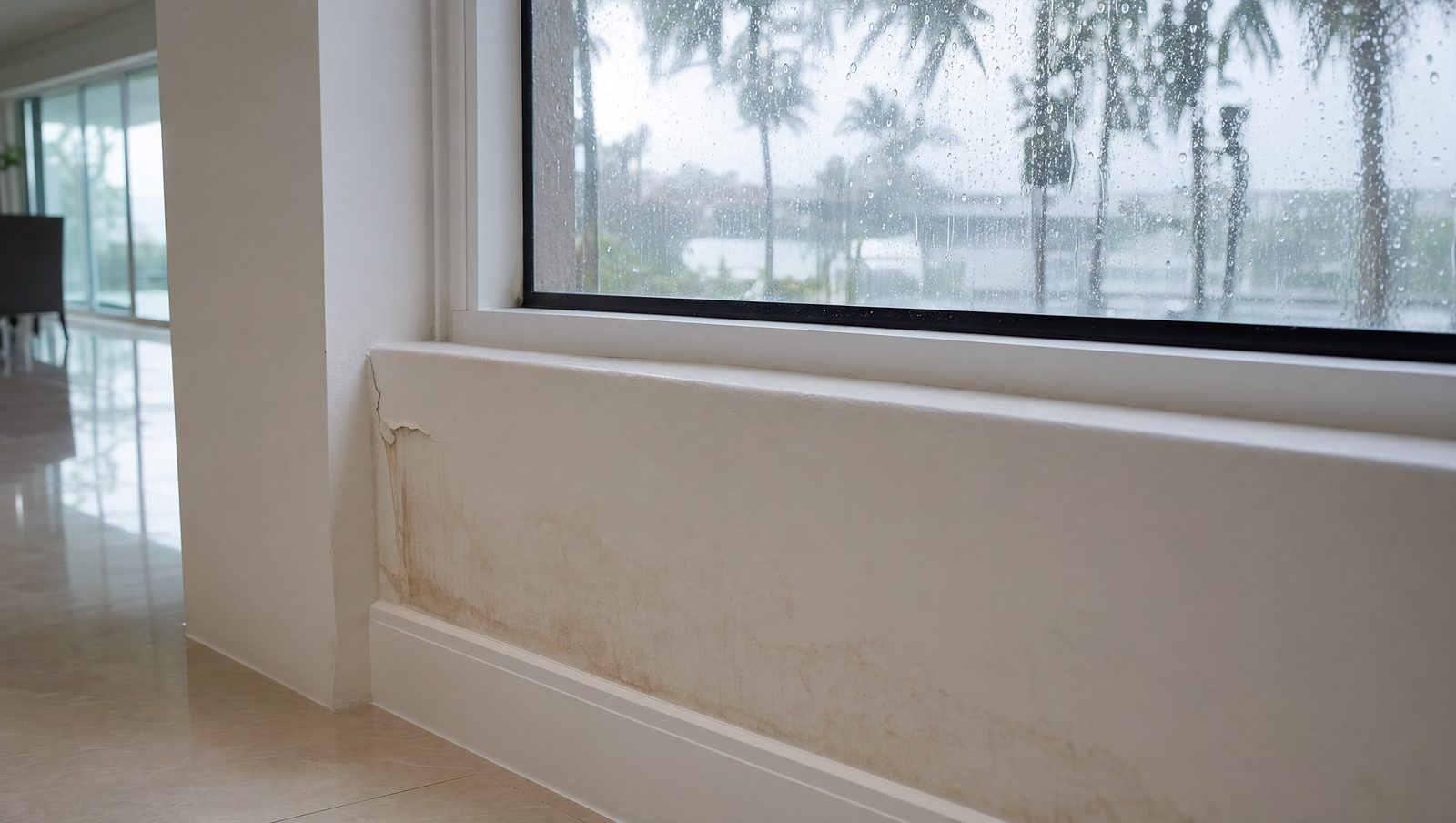
Every rainy season we get the same call from Aventura homeowners: "The roof is leaking." Sometimes it is. But a surprising number of the water stains we're called out to look at aren't coming from the roof at all. They're coming from the windows, the frames around them, or the wall between the two.
That matters, because chasing the wrong leak is expensive. You can pay for a roof repair, watch the next storm roll in, and see the same stain spread right back across the drywall. Before anyone climbs a ladder, it's worth knowing how to tell the difference.
Why Roof Leaks and Window Leaks Look the Same Inside
Water is lazy. It enters at one point, then follows framing, wall cavities and drywall seams until it finds the easiest place to show up. A leak at a roof-to-wall flashing can surface as a stain under a window. A failed window seal can run down inside the wall and show up near the baseboard, nowhere near the glass.
In South Florida, wind-driven rain makes this worse. During a tropical system, rain doesn't fall down — it gets pushed sideways and even upward into gaps that stay perfectly dry in a normal afternoon shower. That's why a leak can appear only during certain storms, from one direction, and disappear for months.
Clues That Point to the Roof
Stains on the ceiling, especially away from exterior walls, usually start above. So do stains that show up after any heavy rain, regardless of wind direction. If you can get into the attic safely, look for darkened sheathing, damp insulation or drip marks on the trusses.
Leaks near where a lower roof meets a second-story wall are another classic. That joint relies on step flashing and counter flashing, and when either one fails, water can run behind the stucco and pop out around the window below. It looks like a window problem, but the fix is on the roof.
Clues That Point to the Windows
If the stain sits right at the corners of a window frame, the sill or the trim, and only shows up when rain hits that side of the house, the window is the prime suspect. Older aluminum frames, cracked caulk, failed sill pans and worn weatherstripping all let water in, and many Aventura homes are still running original windows from decades ago.
The same story plays out everywhere windows age. A good window replacement in Lafayette, Indiana, deals with the same failure points we see here — tired seals, frames that have pulled away from the wall, and water finding its way into the wall cavity — just with snow and freeze-thaw cycles instead of hurricanes. The physics of a leaking window doesn't change much with the zip code.
Fog or moisture between the panes, frames that feel loose, or daylight visible around the edges are all signs the window is past its useful life. At that point, more caulk is a short-term patch, not a fix.
How to Narrow It Down Before You Call Anyone
A few simple steps will save time and money. First, note exactly where the stain appears and which storms produce it — wind direction is a big clue. Second, take photos after each rain so you can see whether it's growing.
Third, run a gentle hose test. Have someone spray the window area for ten minutes while you watch inside, then move the hose up to the roofline and repeat. Work from the bottom up so you aren't soaking the area above and confusing the result.
Finally, check the exterior. Cracked stucco around the window, missing sealant at the frame, or stained siding below a roof-wall joint all tell you where to look next.
Fix the Building Envelope as One System
Your roof, walls and windows work together to keep water out. When one fails, the others get blamed. The best results come when the roofer and the window installer are looking at the same problem, not two separate ones.
If you're seeing stains in your Aventura home and you're not sure where they're coming from, start with a roof inspection that includes the flashing at every wall and window transition. Ruling the roof in or out first means the next repair is the right one.